
The Mistake: Trusting the Sensors Instead of Watching the Door
Most households make the same assumption: the garage door has auto-reverse technology, so it is safe to let kids run through the garage or let the dog wander near the door while it closes. It is an easy mistake to make, especially on a rushed, cold morning when you are juggling coats, backpacks, and a vehicle that needs to warm up. The door is moving anyway, so why not let the kids load into the car while it closes behind them?
The problem is that auto-reverse and photo-eye sensors are a backup, not a babysitter. They are mechanical and electronic systems that can fail, get knocked out of alignment, or get blocked by something as simple as a splash of mud or a film of road salt and snowmelt. When that happens, the door does exactly what it is built to do: close all the way, with whatever is in its path.
What Actually Goes Wrong
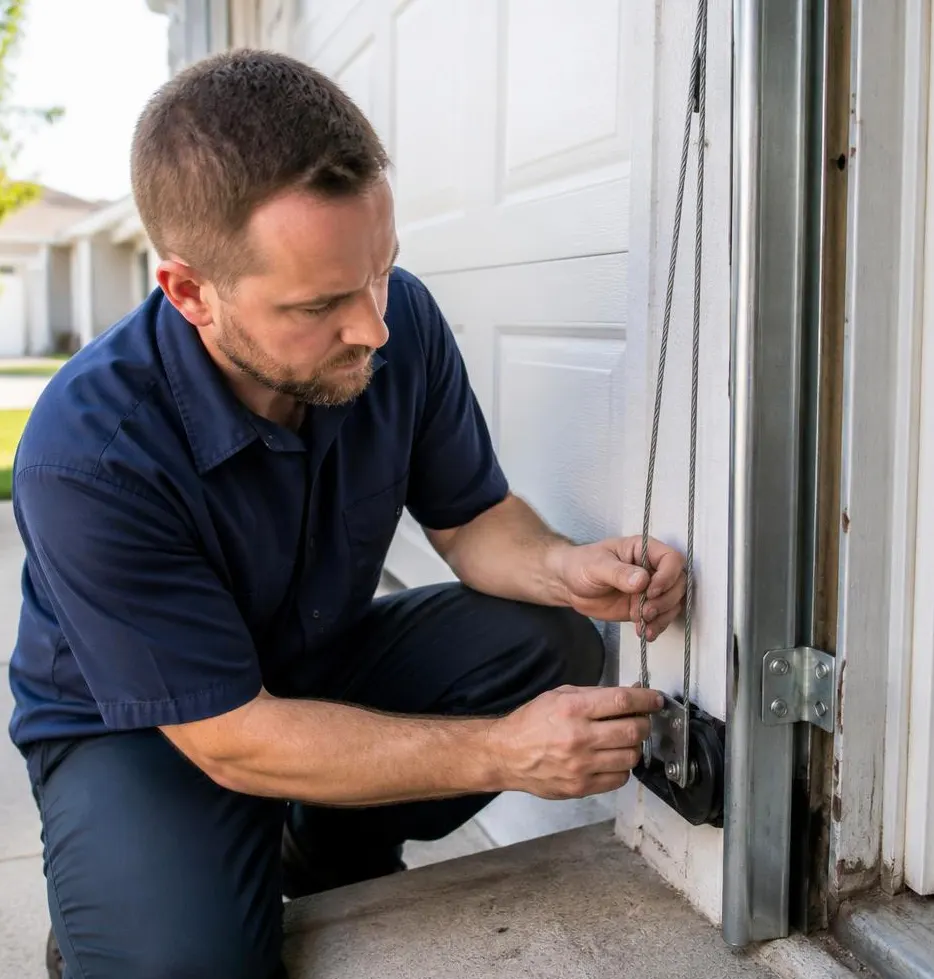
A standard garage door panel can weigh well over a hundred pounds, and a full door assembly with the track and opener hardware is heavy enough to cause serious crush injuries or worse if it comes down on a child's hand, foot, or a pet lying in the doorway. Fingers get caught between door sections as they fold at the pinch points while closing. Torsion springs under heavy tension can snap, especially as cold Michigan winters make older or corroded steel more brittle, and a snapped spring can cause a door to drop suddenly instead of lowering smoothly.
Here in St. Joseph County, the seasons add their own wrinkles. Winter road salt and slush get tracked into garages and onto door hardware, where they corrode cables and tracks, making the door move unevenly, jerk, or stick and then lurch forward unexpectedly. Spring thaw brings mud splatter that can coat photo-eye sensors just enough to block the beam without being obvious at a glance, so the safety reverse silently stops working while the door still looks and sounds normal.
The specific risk points in a typical garage
- Panel pinch points where sections fold together as the door opens and closes
- Torsion springs under high tension above the door, which can fail suddenly if worn or rusted
- Photo-eye sensors near the floor on each side of the track, which can be misaligned, dirty, or blocked
- Remote controls and wall keypads left within easy reach of small children
- The leading edge of the door during the last few inches of closing, where a pet lying down may not be seen by the sensor beam
Concrete Steps That Actually Prevent These Injuries
- Test the auto-reverse monthly. Place a roll of paper towels or a piece of wood flat on the floor in the door's path and close the door. It should reverse the moment it touches the object. If it doesn't, stop using the opener until it's repaired.
- Test the photo-eye reverse separately. Start closing the door and wave a broom handle through the sensor beam partway down. The door should stop and reverse immediately. If it keeps closing, the sensors need cleaning, realignment, or replacement.
- Keep sensor lenses clean and aligned, especially after a muddy spring thaw or a heavy, wet snow. A quick wipe with a soft cloth and a check that both indicator lights are solid (not blinking) takes under a minute.
- Move remotes and keypads out of reach. Store garage door remotes on a high hook or in a drawer rather than a car visor kids can reach, and set wall-mounted openers higher than toddler height if your garage layout allows it.
- Keep force settings reasonable. Don't crank up the opener's closing force to compensate for a door that's sticking from cold-stiffened hardware or dried-out rollers — that just means more force hits anything in the door's path. Lubricate hinges, rollers, and tracks instead so the door moves smoothly on its own.
- Set a stay-back rule during full cycles. Teach kids the garage door is not a toy and establish a clear spot to stand while it opens or closes, especially during school drop-off rushes or when guests are coming and going.
- Have springs inspected before winter. Cold makes metal more brittle, and a spring that's already worn, rusted from humid summer storms, or undersized for the door is more likely to fail when temperatures drop. A worn spring can cause the door to slam instead of lowering under control.
When to Call Colon Garage Door
If your door doesn't reverse during a simple test, grinds or jerks as it moves, has a visibly frayed cable, or you notice the keypad sticking or the remote triggering the door unexpectedly, it's time to get it looked at rather than waiting. As part of a Garage Door Maintenance visit, we check and recalibrate the auto-reverse force, clean and realign photo-eye sensors, inspect cables and rollers for salt and moisture damage, and look for worn pinch points on older doors. If a spring shows rust, flattening, or uneven coils, we handle Spring Replacement with properly sized, correctly tensioned springs so the door opens and closes the way it's supposed to — no slamming, no surprises.
If you're in Colon, Bronson, Coldwater, Three Rivers, Sturgis, Sherwood, Union City, or Centreville and it's been a while since anyone tested your door's safety features, give Colon Garage Door a call. We'll check it properly before winter sets in and your family relies on it every single day.